Soviet Union
The Soviet Union operated one of the most extensive state censorship apparatuses in history. All publications required approval from Glavlit, the central censorship authority, and works deemed politically subversive, religiously motivated, or ideologically impure were systematically suppressed. Authors faced imprisonment, internal exile, or forced psychiatric treatment for writing outside the bounds of Socialist Realism, and samizdat — self-published underground literature — became the primary means of circulating banned works.
Banned books
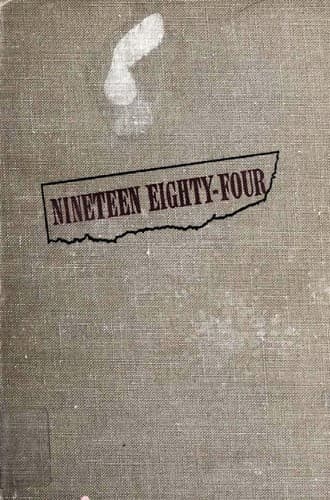
1984
George Orwell
Nineteen Eighty-Four: A Novel, often referred to as 1984, is a dystopian social science fiction novel by the English novelist George Orwell (the pen name of Eric Arthur Blair). It was published on 8 June 1949 by Secker & Warburg as Orwell's ninth and final book completed in his lifetime. Thematically, Nineteen Eighty-Four centres on the consequences of totalitarianism, mass surveillance, and repressive regimentation of persons and behaviours within society. Orwell, himself a democratic socialist
Government / national · 1950 · lifted
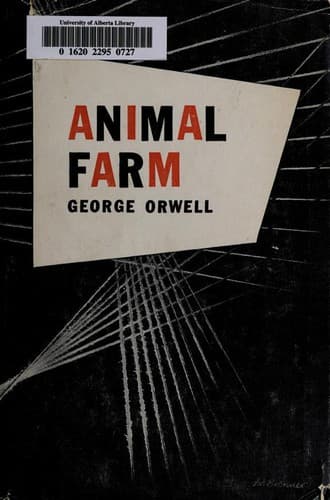
Animal Farm
George Orwell
Animal Farm is a brilliant political satire and a powerful and affecting story of revolutions and idealism, power and corruption. 'All animals are equal. But some animals are more equal than others.' Mr Jones of Manor Farm is so lazy and drunken that one day he forgets to feed his livestock. The ensuing rebellion under the leadership of the pigs Napoleon and Snowball leads to the animals taking over the farm. Vowing to eliminate the terrible inequities of the farmyard, the renamed Animal Farm is
Government / national · 1945 · lifted
Cancer Ward
Aleksandr Solzhenitsyn
Government / national · 1966 · lifted
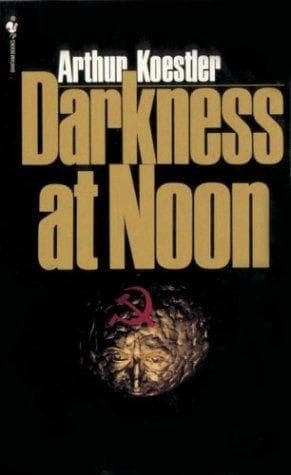
Darkness at Noon
Arthur Koestler
**Darkness at Noon** (German: *Sonnenfinsternis*) is a novel by Hungarian-born British novelist Arthur Koestler, first published in 1940. His best known work, it is the tale of Rubashov, an Old Bolshevik who is arrested, imprisoned, and tried for treason against the government that he helped to create. The novel is set in 1939 during the Stalinist Great Purge and Moscow show trials. Despite being based on real events, the novel does not name either Russia or the Soviets, and tends to use gene
Government / national · 1941 · lifted
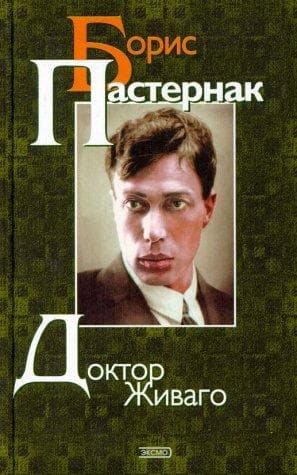
Doctor Zhivago
Boris Pasternak
***This epic tale about the effects of the Russian Revolution and its aftermath on a bourgeois family was not published in the Soviet Union until 1987.*** One of the results of its publication in the West was Pasternak's complete rejection by Soviet authorities; when he was awarded the Nobel Prize for Literature in 1958 he was compelled to decline it. ***The book quickly became an international best-seller.*** **Dr. Yury Zhivago, Pasternak's alter ego, is a poet, philosopher, and physician wh
Government / national · 1957 · lifted
Everything Flows
Vasily Grossman
Government / national · 1961 · lifted
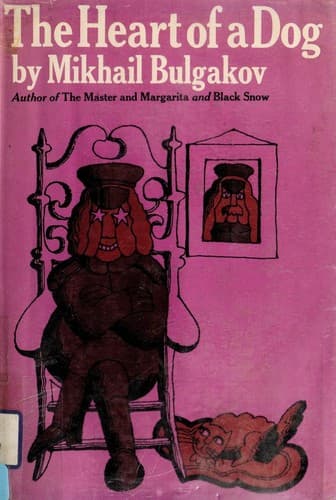
Heart of a Dog
Mikhail Bulgakov
Government / national · 1925 · lifted
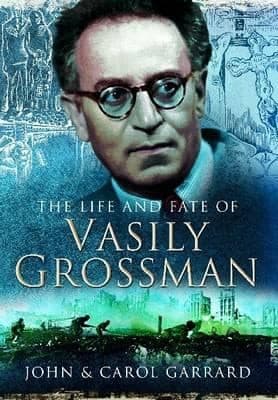
Life and Fate
Vasily Grossman
Government / national · 1960 · lifted
Midnight in the Century
Victor Serge
Government / national · 1934 · lifted
One Day in the Life of Ivan Denisovich
Aleksandr Solzhenitsyn
First published in the Soviet journal Novy Mir in 1962, One Day in the Life of Ivan Denisovich stands as a classic of contemporary literature. The story of labor-camp inmate Ivan Denisovich Shukhov, it graphically describes his struggle to maintain his dignity in the face of communist oppression. An unforgettable portrait of the entire world of Stalin's forced work camps, One Day in the Life of Ivan Denisovich is one of the most extraordinary literary documents to have emerged from the Soviet Un
Government / national · 1974 · lifted
Requiem
Anna Akhmatova
Government / national · 1963 · lifted
The First Circle
Aleksandr Solzhenitsyn
Government / national · 1968 · lifted
The Foundation Pit
Andrei Platonov
Government / national · 1930 · lifted
The Gulag Archipelago
Aleksandr Solzhenitsyn
The Gulag Archipelago is Solzhenitsyn's masterwork, a vast canvas of camps, prisons, transit centres and secret police, of informers and spies and interrogators and also of heroism, a Stalinist anti-world at the heart of the Soviet Union where the key to survival lay not in hope but in despair. The work is based on the testimony of some two hundred survivors, and on the recollection of Solzhenitsyn's own eleven years in labour camps and exile. It is both a thoroughly researched document and a fe
Government / national · 1973 · lifted
The Jungle
Upton Sinclair
Government / national · 1956 · lifted
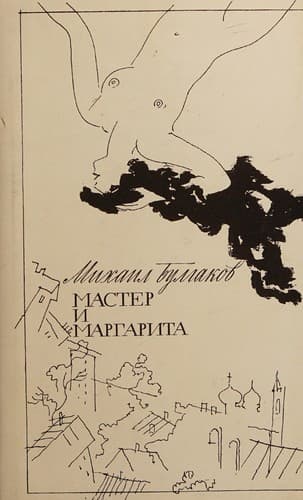
The Master and Margarita
Mikhail Bulgakov
*The Master and Margarita* (Russian: Мастер и Маргарита) is a novel by Mikhail Bulgakov, written in the Soviet Union between 1928 and 1940. The story concerns a visit by the devil and his entourage to the officially atheist Soviet Union. The devil, manifested as one Professor Woland, challenges the Soviet citizens' beliefs towards religion and condemns their behavior throughout the book. *The Master and Margarita* combines supernatural elements with satirical dark comedy and Christian philosophy
Government / national · 1940 · lifted
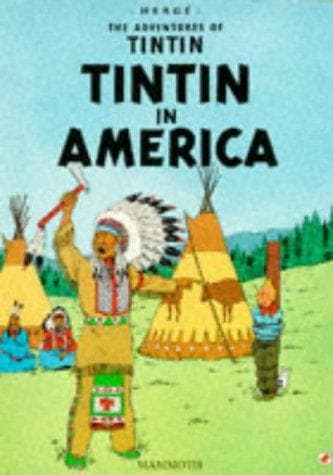
The Tintin series
Hergé
Government / national · 1929 · lifted
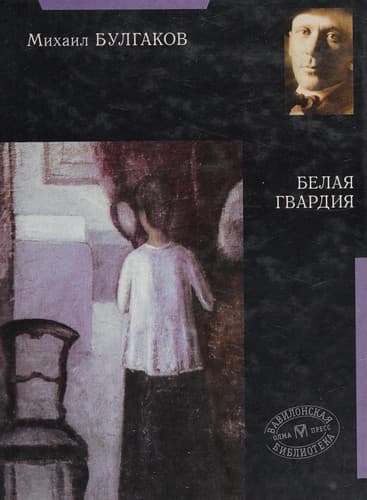
The White Guard
Mikhail Bulgakov
Government / national · 1929 · lifted
We
Yevgeny Zamyatin
Government / national · 1921 · lifted